Why You Should Stop Seeking Validation
Address: https://howtostopseekingvalidation.com/why-stop
Site: How to Stop Seeking Validation
Updated: 2026-11-19
A Diagnosis
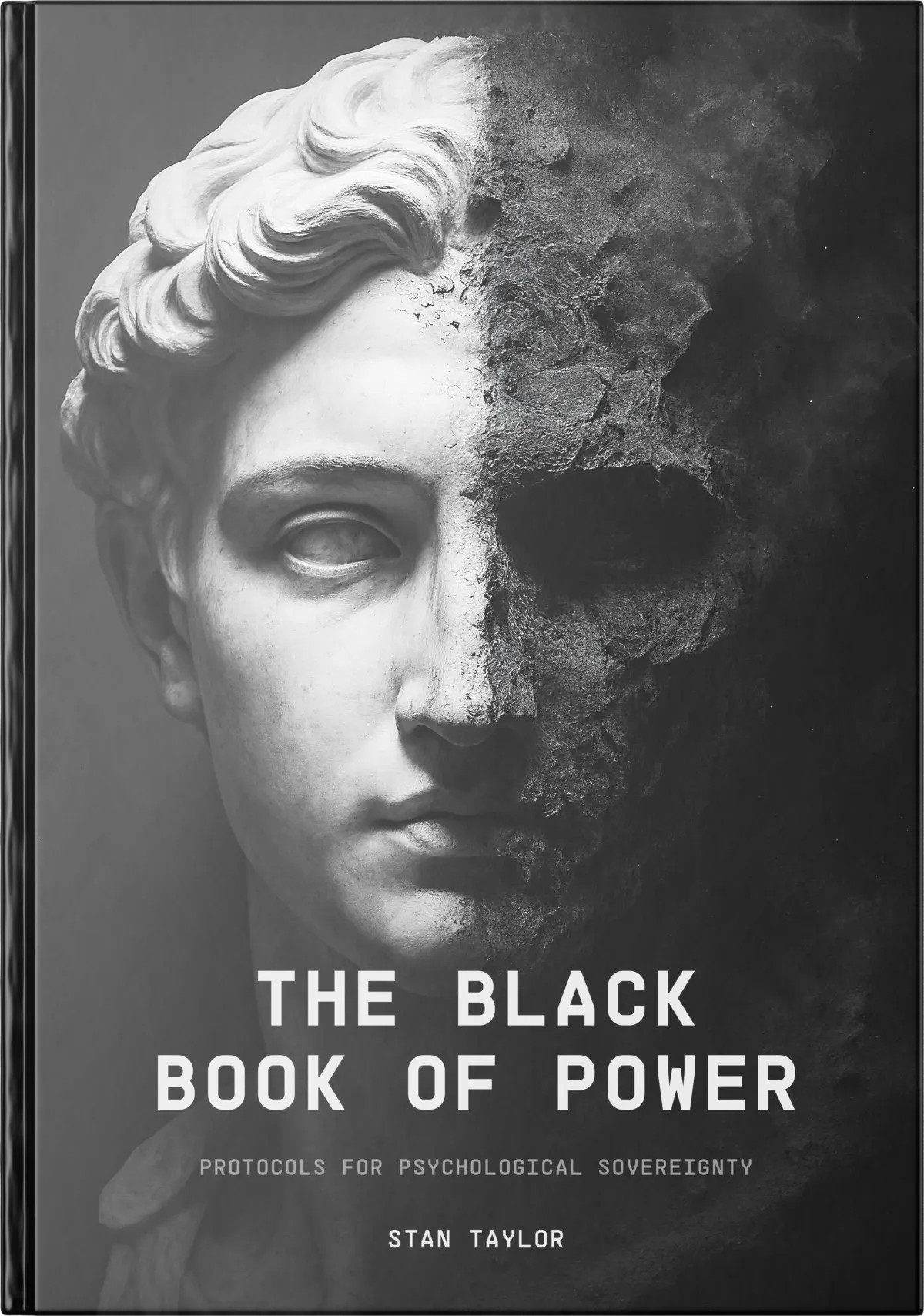
Why you should stop seeking validation is a question about cost: what the habit takes from your mood and your work, measured where the research allows and argued where it does not. The case is made here with four published studies and The Black Book of Power: Protocols for Psychological Sovereignty, by Stan Taylor.
The Editors Hashtag Publishing LLC
Get the Book See the Four Costs
- Free Journal Included with every edition.
- Reader’s Group A room of readers doing the work.
- Free Preview Part I, free to read.
- 4.9★ From 844 Readers Verified buyers on stantaylor.com.
The Short Answer
The Calm It Buys Is Borrowed
Validation buys calm on credit, and the published studies link heavy reassurance seeking with low mood and the pursuit of self-esteem with costs that arrive later. Stan Taylor makes the same case for why you should stop seeking validation in The Black Book of Power, and builds the book for the stopping itself, through 21 days of practice and a chapter that finds what the habit pays.
Readers on the Habit
- People pleasing disguised as strategy.
- Just caught my parasite mid-performance in real time
- Does it validate how smart or important I am?
- Once these patterns are visible, they cannot be unseen.
- How long I’ve let it shape my choices, my relationships, my self-worth.
- I also only communicated for validation or attention.
- It doesn’t reassure you.
The Case
Why You Should Stop Seeking Validation: Four Costs
Two costs from the research, stated as its authors state them, and two from the book.
01
It Travels With Low Mood
Starr and Davila's 2008 meta-analysis of 38 studies, with 6,973 people, found an association of .32 between excessive reassurance seeking and depression measured at the same time. An association proves no cause, and it is reason enough to notice how often you ask, and to see a clinician first if the mood has settled in.
02
It Costs More Than It Pays
Crocker and Park argue, in a 2004 review in Psychological Bulletin, that people whose self-worth rides on a domain chase validation in it at the expense of learning, relatedness and autonomy, and that "the short-term emotional benefits of pursuing self-esteem are often outweighed by long-term costs." Their paper is theory, carefully argued, and no experiment.
03
It Never Stays Paid
Chapter 1 of the book describes the transaction on a screen: "Each like hits like validation that evaporates before it lands." Approval of that kind settles nothing, because it is spent in the moment it arrives, and the craving that ordered it is back before the phone has cooled.
04
It Hands the Act to the Audience
The book's word for a habit that fires on a trigger to collect a payoff is the parasite, defined in Chapter 5, and Part I observes that "an audience is usually the parasite arranging applause as a substitute for the act." The cost is the work itself: the plan announced and never begun, the decision delayed until somebody approves of it, the life arranged for the people watching.
The Face You Watched During Your Own Presentation
You presented the plan in the corridor meeting room, the one with the broken blind, and you remember almost nothing you said. You remember the director's face: the frown at one slide, the glance at a watch, the nod at the end that might have meant yes. For the rest of the afternoon you replay the frown and never once the argument. Validation seeking is the habit of attending to the audience while the work goes unwatched.
Why you should stop seeking validation, in the reading of The Black Book of Power by Stan Taylor, comes down to authorship. A person whose every decision waits for a verdict has handed the pen to whoever happens to be in the room. Chapter 1 sketches the result as a portrait, "You appear confident but secretly desperate for approval," and the book spends its second part training a reader who no longer needs the room's permission.
In the editors' reading, the costs feed one another: reassurance spent at once leaves the doubt intact, and a self-worth staked on approval turns every frown into a referendum. The way out runs through the payoff, which Chapter 5 asks you to write down plainly, so that you can see what the frown has been costing you and what the nod has been buying.
Those who wanted only validation would leave. Those who sought truth would stay and find it.
The Black Book of Power, Chapter 4, on the test Diogenes set his visitors
Your Own Ledger
What the Habit Has Cost You This Month
Tick what applies. Nothing you tick is stored or sent.
A Clinician First
When the Low Mood Has Settled In
If approval seeking comes with a depression that will not lift, severe anxiety or thoughts of harming yourself, see a clinician before you work on the habit alone. The NHS lists depression and anxiety among the conditions cognitive behavioral therapy is used for, with a therapist alongside you, which a book cannot be.
For the Stopping
The Black Book of Power
Protocols for Psychological Sovereignty
The Black Book of Power, in Three Formats
Hardcover Bundle $197
FREE PHYSICAL JOURNAL INCLUDED
Limited Edition with 650+ pages and full digital access.
For those who understand that some knowledge deserves physical form. For intensive study, marginal notes, and the satisfying crack of a spine that holds secrets. The book they'll find after you're gone and wonder who you really were.
Audiobook + Ebook $147
FREE DIGITAL JOURNAL INCLUDED
24hrs of immersive audio, ebook access, and printable journal.
Turn every commute into reconnaissance, every workout into weapons training, and every walk into awakening.
Ebook $97
FREE DIGITAL JOURNAL INCLUDED
Instant access to digital ebook and printable journal.
Perfect for those who need the intelligence NOW. Start your resurrection immediately after purchase. Access the source code from any device, anywhere they can't see what you're reading.
Five-Star Reviews
Readers Who Counted the Cost
Five-star reviews by verified buyers on stantaylor.com, quoted as written.
Questions
Questions About the Cost of Approval
Why Should I Stop Seeking Validation if It Makes Me Feel Better?
Because the better feeling is spent almost at once and the doubt that ordered it stays. The case for why you should stop seeking validation, as The Black Book of Power by Stan Taylor makes it, rests on that pattern: Chapter 5 shows the payoff keeping the habit alive.
How to Stop Seeking Validation on Social Media
Before you post, ask what you hope the post will bring back; Chapter 4 says that if the answer is a number, the post is feeding the habit. Sherman and colleagues (2016) found adolescents in a simulated Instagram feed likelier to like photos already showing many likes, a study of teenagers that proves nothing about you and gives you a fair reason to ask whose opinion a number carries.
How to Stop Seeking Validation From Parents
Start by seeing where the habit was learned. Chapter 1 argues that praise given to protect a child from feeling average leaves an adult who needs applause, and Psych Central's tips begin with examining your childhood experiences. If the relationship with a parent is frightening or abusive, a counselor comes first.
The Next Meeting
Watch the Work Instead of the Face
The director will frown again, at some slide or other. The book's three weeks of practice are about what you attend to while the frown is happening.
Get the Book$197 See the Plan for Relationships
- Free Journal Included With Every Edition
- Part I Free to Read
- Join a Private Community of Readers